





When the clock strikes 7 AM, the world springs to life, and so do countless professionals gearing up for the day ahead. But how many hours does this bustling time frame actually cover? Spoiler alert: it’s not as tricky as that last math problem from high school.
From the first sip of coffee to the final email sent at 5 PM, this span of time is often a whirlwind of productivity. Whether you’re clocking in at the office or working from home in your pajamas, knowing how many hours are packed into this timeframe can help you manage your day better. So, let’s break it down and uncover the magic of those ten hours—because who doesn’t love a little math with their morning caffeine?
Understanding Time Duration
The duration from 7 AM to 5 PM spans 10 hours. This timeframe is significant in many professional settings. Professionals often engage in various activities during these hours, from meetings to project work.
Calculating the hours can clarify daily schedules. When assessing productivity, recognizing this 10-hour block aids in time management. Each hour presents opportunities for planning tasks effectively.
Breaking down the hours reveals potential for focused work. Six hours in the morning from 7 AM to 1 PM allow for peak productivity. Following this, a two-hour lunch or break can recharge energy before continuing.
The afternoon consists of four hours, from 1 PM to 5 PM. Efficient use of these hours often determines daily success. Prioritizing essential tasks can lead to achieving more within this structured time.
Recognizing this 10-hour span encourages strategic planning. Whether it’s setting goals or allocating specific tasks, understanding the duration directly impacts daily outcomes. Ultimately, effective time management during these hours can enhance productivity and promote work-life balance.
Calculating Hours Between Two Times
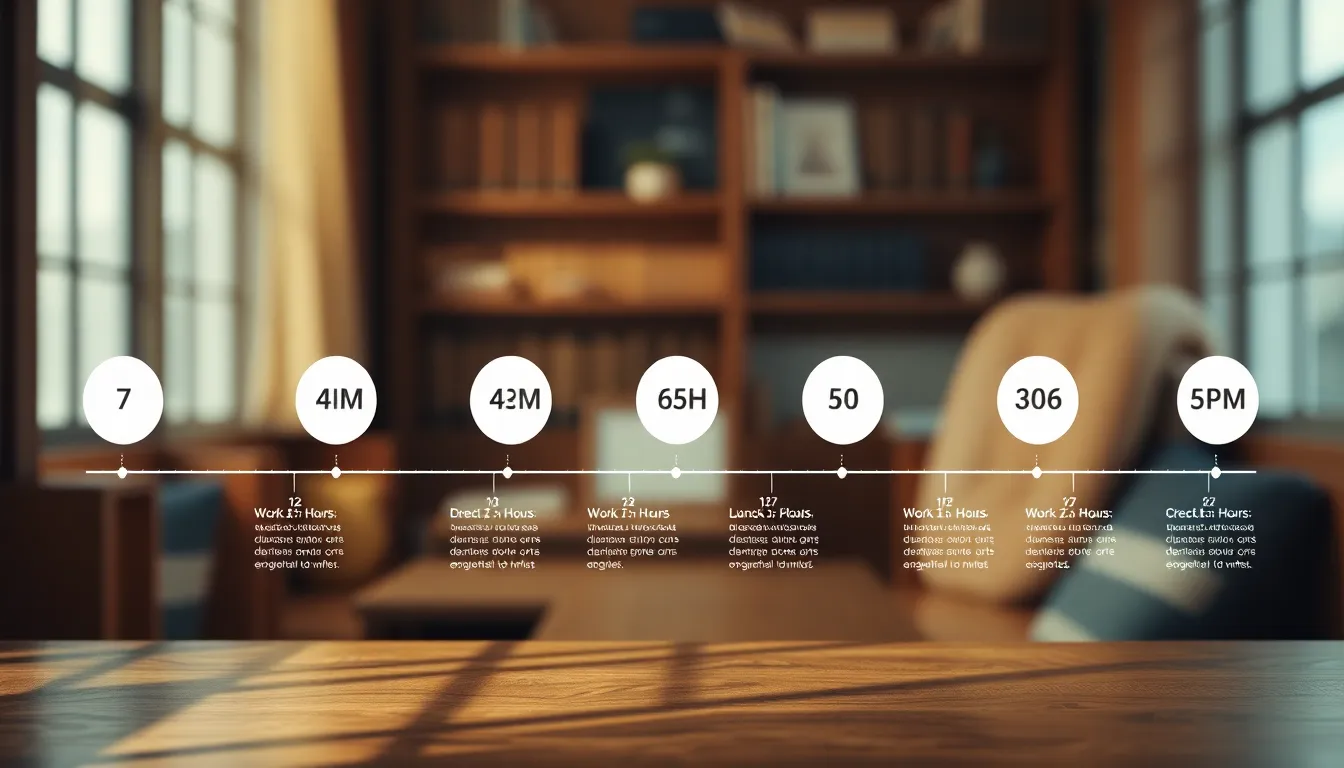
Understanding the time from 7 AM to 5 PM covers 10 total hours. This knowledge supports effective planning for professionals navigating their daily activities.
Step-by-Step Calculation
Calculating the hours between these two times starts with identifying the starting point at 7 AM. Adding six hours brings you to 1 PM. This marks the end of the morning productivity phase. Following this, a two-hour lunch break enhances recharge efforts. After the break, four more hours stretch until 5 PM. This breakdown emphasizes the importance of maximizing productivity during key hours.
Visual Representation
A simple visual representation can aid in grasping the time distribution. Consider a timeline that highlights 7 AM to 1 PM for the first six hours, showing peak productivity. Next, a two-hour segment for lunch follows, running from 1 PM to 3 PM. Finally, four hours from 3 PM to 5 PM conclude the day. This representation clarifies how segments of time function in tandem with productivity, helping professionals manage their schedules more effectively.
Common Work Hours
Working hours often align with common office schedules, where 7 AM to 5 PM represents a standard span in many sectors. This timeframe typically includes a one- or two-hour lunch break, segmenting the day into productive hours. Professionals focus on tasks during the morning, making that time frame particularly crucial. Consistent routines within this hour range help increase efficiency.
Typical Office Hours
Most offices operate between 9 AM and 5 PM, allowing for a traditional eight-hour workday. Although some businesses maintain earlier hours, like 7 AM, the core working time remains constant for productivity. Employees usually engage in meetings and collaborative projects during these hours. Flexibility exists, with some teams opting for staggered shifts to accommodate varying schedules. Commuters appreciate the earlier start, enabling more time for personal activities post-work.
Variations Across Industries
Industries often display unique working hours beyond the typical office norms. Healthcare professionals, for example, frequently work shifts that extend beyond the standard timeframe. Retail and hospitality sectors see varied hours, including weekends, evenings, and holidays. Tech companies may embrace flexible schedules, allowing employees to choose their preferred working times. This adaptability aids in retaining talent and promoting a healthy work-life balance.
Importance of Time Management
Effective time management plays a crucial role in professional productivity. Understanding the 10-hour block from 7 AM to 5 PM enhances daily organization. The morning hours, specifically the six hours from 7 AM to 1 PM, often represent peak productivity periods. Utilizing this time effectively allows for the successful completion of important tasks.
After the morning work session, a two-hour lunch break serves as an essential recharge moment. Taking time away from work fosters mental clarity and reduces fatigue. Once back at work, the remaining four hours from 1 PM to 5 PM present opportunities for focused task execution. Efficiently utilizing these afternoon hours can significantly affect overall daily outcomes.
Prioritizing essential tasks within this timeframe becomes vital. Identifying which activities yield the most results helps professionals stay ahead. Attention to time management leads to better planning and execution of work duties. Visual representations of the daily schedule reinforce understanding of how to allocate time effectively.
Familiarity with typical work hours fosters routine establishment. Many offices function from 9 AM to 5 PM, yet variations exist across different industries. Recognition of diverse working hours allows companies to meet unique employee needs, promoting a healthier work-life balance. By maintaining consistent routines, individuals can boost efficiency during the busiest hours of the day.
Incorporating clear strategies into daily workflows maximizes time management. Effective planning isn’t just beneficial; it’s essential for achieving professional goals. Prioritization of responsibilities ensures that individuals address high-impact tasks first. Connecting these practices leads to improved productivity and satisfaction in professional environments.
Understanding the 10-hour span from 7 AM to 5 PM is vital for anyone looking to enhance their productivity. This timeframe not only accommodates a busy work schedule but also offers opportunities for strategic planning and effective time management. By recognizing peak productivity hours and incorporating breaks, professionals can optimize their workflows and achieve a better work-life balance. Embracing these insights allows individuals to navigate their day with confidence, ensuring they make the most of each hour.