





Augmented reality (AR) is revolutionizing the way people interact with the world around them. By blending digital information with the physical environment, AR enhances everyday experiences, making them more immersive and engaging. From gaming to education and beyond, this technology is reshaping industries and altering perceptions.
As AR continues to evolve, its applications are becoming increasingly diverse. Businesses are leveraging AR for marketing, training, and customer engagement, while consumers enjoy interactive experiences that were once confined to the realm of science fiction. With its potential to transform how we perceive reality, augmented reality is not just a trend; it’s the future of human interaction.
Overview of Augmented Reality
Augmented reality (AR) enhances how individuals interact with their environments by layering digital information onto the physical world. This technology continues to evolve, broadening its applications across multiple sectors.
Definition of Augmented Reality
Augmented reality refers to a technology that superimposes computer-generated content onto real-world environments. This content can include images, videos, and sounds. AR systems use sensors, cameras, and software to recognize surrounding elements, seamlessly integrating virtual components with actual spaces. Devices such as smartphones, tablets, and AR glasses often facilitate this experience.
History and Evolution
The development of augmented reality traces back to the 1960s. Early experiments included Ivan Sutherland’s “Sword of Damocles,” a rudimentary head-mounted display. In the 1990s, AR gained traction in research and commercial applications, notably in military simulations. The introduction of mobile devices in the 2000s enabled broader accessibility, with significant milestones like the launch of Pokémon GO in 2016 demonstrating AR’s potential for mainstream engagement. Recent advancements continue to drive AR’s integration in industries such as healthcare, retail, and education, reflecting its growing societal impact.
Applications of Augmented Reality
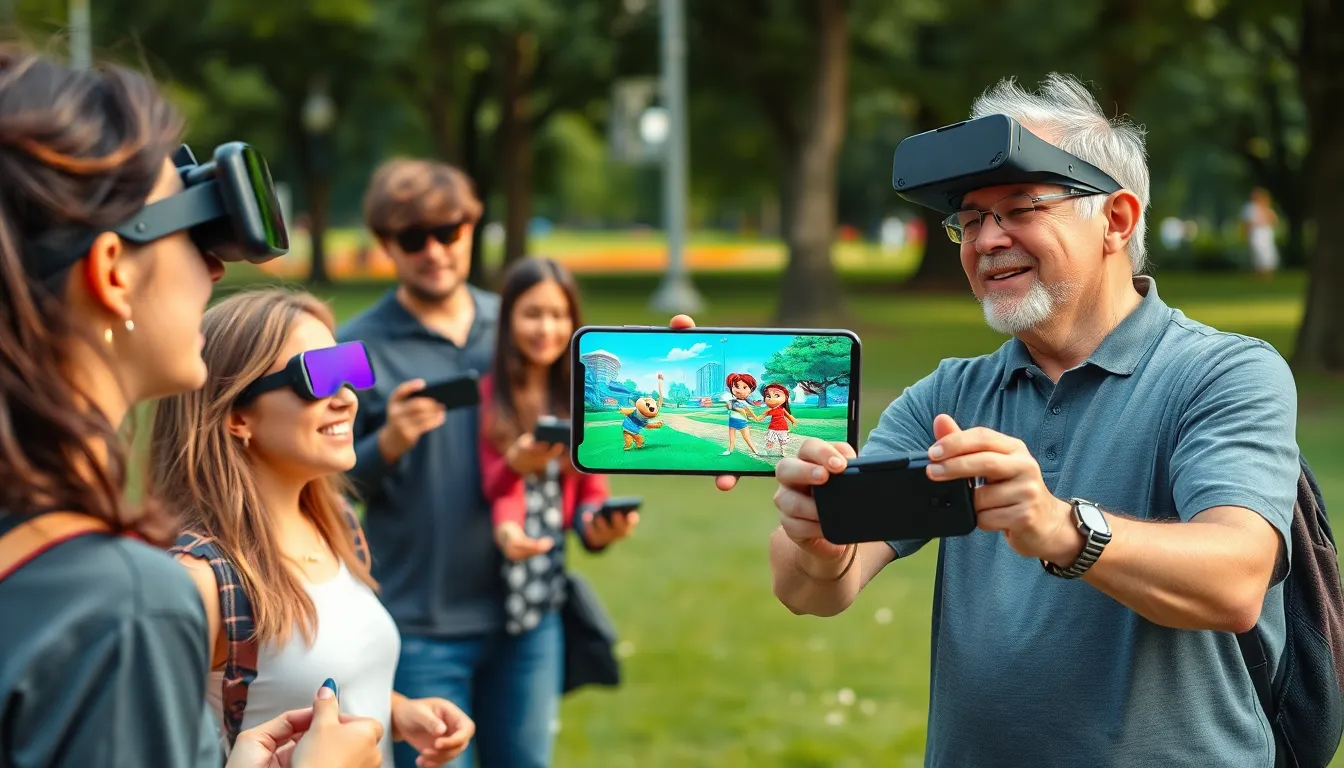
Augmented reality (AR) boasts a diverse range of applications across various industries. Each sector leverages AR to enhance user experience and engagement in unique ways.
Gaming and Entertainment
Gaming and entertainment represent one of the most visible applications of AR. Popular mobile games like Pokémon GO create immersive experiences by blending virtual characters with real-world environments. AR enhances traditional game mechanics by allowing players to interact with their actual surroundings while engaging in gameplay. Titles such as Harry Potter: Wizards Unite further illustrate AR’s potential by incorporating location-based elements and social interactions, deepening player engagement and offering shared experiences. Additionally, AR adds layers of interactive storytelling, elevating the overall enjoyment and creating memorable moments for users.
Education and Training
In education and training, AR transforms how information is delivered and absorbed. Educational apps like Google Expeditions enable students to explore historical sites or complex scientific concepts through immersive 3D models. Trainers in various fields—healthcare, manufacturing, and aviation—employ AR simulations to provide realistic, hands-on learning environments while minimizing risks. Research shows that AR can enhance retention rates by up to 70%, making it an effective tool for both teachers and students. This technology fosters collaborative learning experiences, paving the way for a more interactive and engaging educational landscape.
Healthcare and Medicine
Healthcare and medicine utilize AR to improve patient outcomes and streamline procedures. Surgeons incorporate AR in operating rooms to visualize patient data and anatomy in real-time, enhancing precision during operations. Programs like Medivis enable surgical teams to overlay critical information on patient bodies during procedures, significantly reducing risks. In patient education, AR applications allow individuals to visualize complex medical information, fostering better comprehension of their conditions and treatments. Moreover, AR aids in rehabilitation, providing patients with interactive exercises that monitor progress and encourage participation.
Technology Behind Augmented Reality
Augmented reality (AR) relies on a combination of hardware and software that work together to create immersive experiences by blending digital content with the physical world.
Hardware Components
Hardware components play a crucial role in the functionality of AR systems. Common elements include:
- Sensors: Devices like accelerometers, gyroscopes, and GPS track motion and position, enabling accurate placement of virtual objects in real environments.
- Cameras: Front- and rear-facing cameras capture images and videos, allowing the system to recognize and analyze real-world surroundings.
- Displays: Screens on smartphones, tablets, or specialized AR glasses present the blended content, enhancing user experiences through interactive visuals.
- Processors: Powerful processors are essential for real-time data analysis and rendering graphics, ensuring a smooth and responsive performance during AR interactions.
Software Development
Software development for AR focuses on creating applications that merge physical and digital environments. Key elements include:
- AR SDKs: Software Development Kits (SDKs) like ARKit and ARCore enable developers to build AR applications by providing tools for motion tracking, environmental understanding, and light estimation.
- 3D Modeling: 3D modeling software is used to create detailed digital objects, ensuring compatibility with AR systems and enhancing visual quality.
- Machine Learning: Machine learning algorithms improve object recognition and interaction, allowing AR applications to learn from user behavior and adapt accordingly.
- User Interface Design: Effective UI design ensures intuitive navigation and engagement, making AR experiences accessible and enjoyable for users.
By integrating advanced hardware components with robust software development, augmented reality continues to evolve and expand its capabilities across various sectors.
Benefits of Augmented Reality
Augmented reality offers significant advantages, enhancing how users interact with and perceive their environments. Key benefits include improved user experiences and heightened engagement across numerous sectors.
Enhanced User Experience
Enhanced user experience stands as a primary benefit of augmented reality. AR integrates digital elements seamlessly within the physical world, creating interactive environments that captivate users. For example, in retail, customers can visualize furniture in their homes before purchasing. This immersive approach reduces buyer uncertainty and improves customer satisfaction. In education, AR enables students to interact with 3D models, deepening their understanding of complex concepts. By facilitating the exploration of real-world phenomena through virtual overlays, AR transforms learning into a dynamic process.
Increased Engagement
Increased engagement is another vital benefit inherent in augmented reality. AR technologies engage users by providing real-time interactions and personalized experiences. For instance, brands utilize AR in marketing campaigns to create interactive advertisements that attract consumer attention. When customers can engage with a product virtually, the likelihood of purchase increases. Additionally, in gaming, AR enhances player involvement by merging in-game elements with real-world settings, as seen in popular titles. This combination keeps users invested and encourages them to explore further.
Challenges and Limitations
Augmented reality (AR) faces several challenges and limitations that hinder its widespread adoption and effectiveness. Addressing these issues can enhance the technology’s potential and usability across various sectors.
Technical Challenges
AR technology encounters significant technical challenges. Hardware limitations persist, as many devices struggle to support complex graphics and processes required for seamless AR experiences. High-performance processors, advanced sensors, and displays with greater resolution are essential for achieving the desired quality. Additionally, integration difficulties occur when developing compatible software that consistently works across multiple devices and platforms. The varying levels of hardware capabilities in smartphones and AR glasses affect user experiences, leading to inconsistencies. Furthermore, environmental factors like lighting and spatial awareness complicate the accurate overlay of digital content in real-world scenarios. These technical hurdles must be overcome to enhance AR’s functionality and reliability.
Privacy Concerns
Privacy concerns arise significantly with AR applications that collect and process personal data. Many AR experiences rely on extensive data from users, including location tracking, facial recognition, and environmental scanning. This data collection creates risks of unauthorized access and potential misuse. Users often remain unaware of how their data is used or shared, generating distrust and reluctance to engage with AR technologies. Regulatory compliance, particularly concerning the General Data Protection Regulation (GDPR), presents another challenge for developers who must ensure they protect user privacy while maintaining functionality. Addressing these privacy issues is crucial in building user confidence and fostering broader acceptance of AR technology.
Augmented reality is redefining the way individuals interact with their environments. Its ability to blend digital content with the physical world is paving the way for innovative applications across various industries. As AR technology continues to advance, it promises to enhance user experiences and engagement like never before.
While challenges remain in terms of hardware limitations and privacy concerns, the potential for AR is immense. With ongoing developments in both technology and applications, it’s clear that augmented reality is set to play a pivotal role in shaping future interactions. Embracing this evolution will not only enrich experiences but also open new avenues for creativity and connection.