




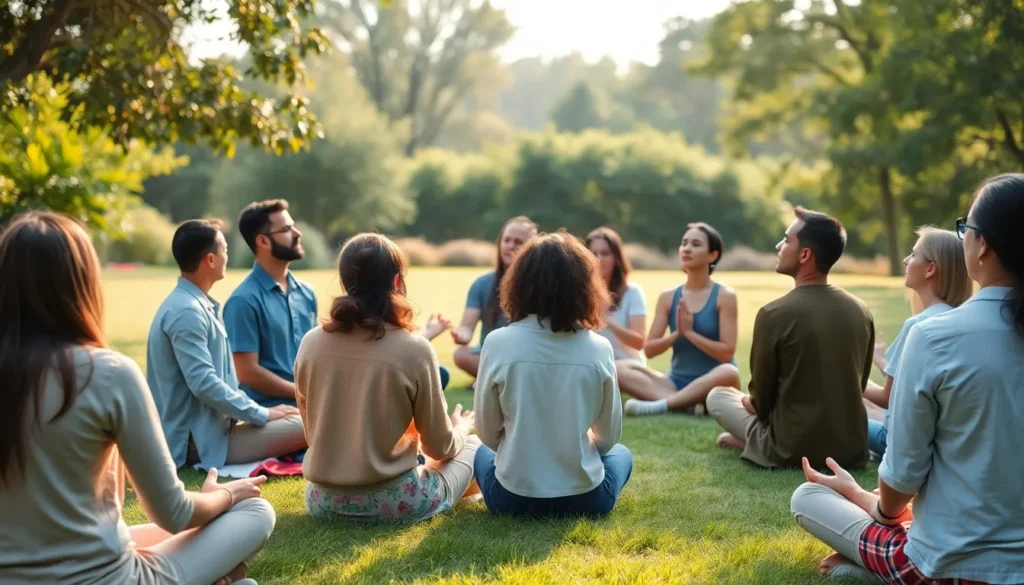
In today’s fast-paced world, finding a moment of peace can feel like searching for a needle in a haystack. Enter mindfulness exercises for groups—your ticket to a calmer, more connected experience. Imagine a gathering where everyone’s stress melts away faster than ice cream on a summer day. Sounds dreamy, right?
Benefits of Mindfulness Exercises for Groups
Mindfulness exercises offer diverse benefits for groups, promoting a sense of connection and emotional stability. These practices significantly enhance participants’ collective experience.
Enhancing Emotional Well-being
Mindfulness exercises foster emotional awareness among group members. Regular practice leads to reduced anxiety levels and improved mood. Participants experience a drop in stress hormones, which contributes to a more positive atmosphere. Engaging in group mindfulness also strengthens empathy and compassion, enabling individuals to better understand each other’s feelings. As connections deepen, people often find themselves more supportive and understanding, which bolsters collective emotional health.
Improving Group Dynamics
Mindfulness exercises play a crucial role in refining group dynamics. These activities promote open communication, allowing members to express themselves without fear. Trust builds when participants engage in non-judgmental listening experiences. Group cohesion strengthens as individuals feel more valued and understood. Furthermore, mindfulness cultivates patience and tolerance, which improve conflict resolution. Overall, a mindful environment enhances collaboration and encourages effective teamwork.
Types of Mindfulness Exercises for Groups
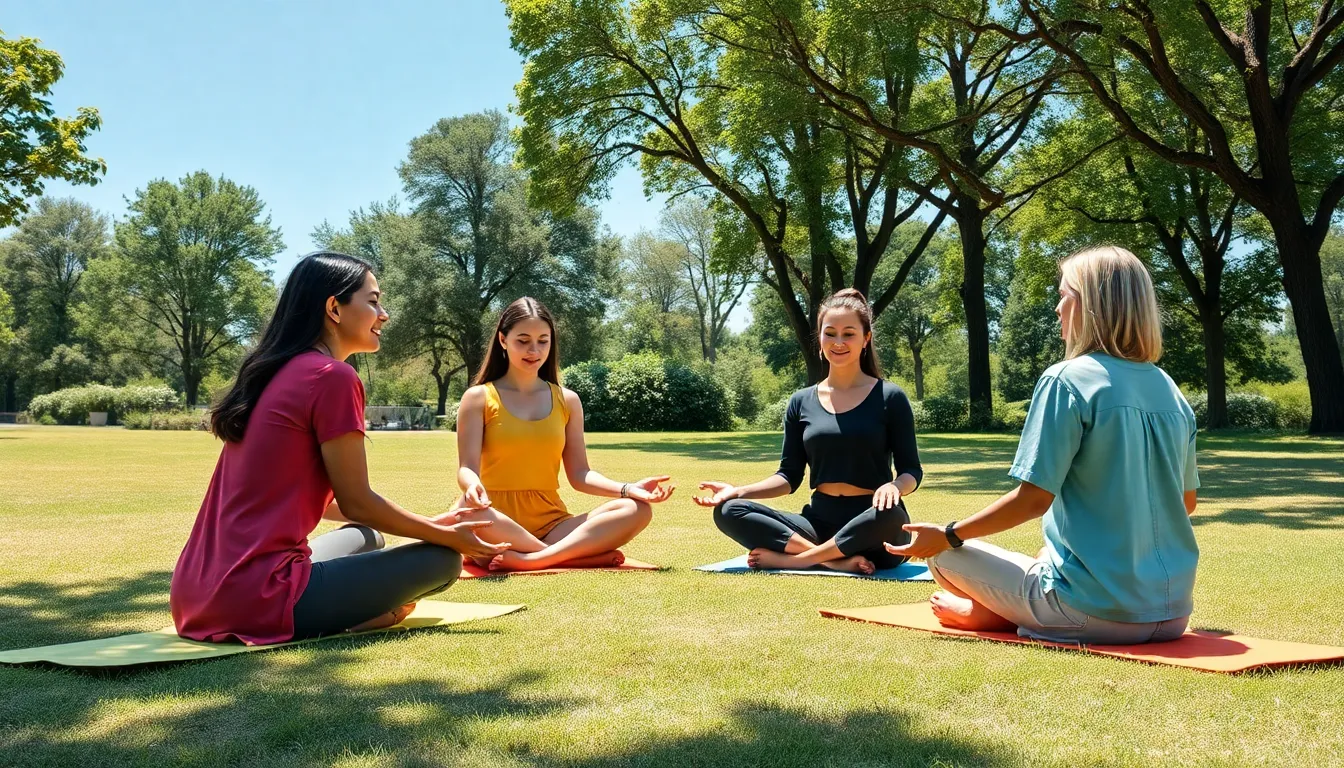
Mindfulness exercises for groups encompass a variety of techniques that promote relaxation and awareness. Three effective methods include breathing techniques, guided meditation, and body scan.
Breathing Techniques
Breathing techniques encourage participants to focus on their breath, fostering a sense of calm. Simple exercises like deep diaphragmatic breathing enhance awareness of the present moment. With a structured approach, individuals count breaths, experiencing heightened relaxation with each cycle. Group members can emphasize the unity of breath, promoting shared experiences that enhance connection. Incorporating visualizations during breathing helps deepen the experience, making it accessible to everyone involved.
Guided Meditation
Guided meditation offers a structured path to mindfulness through verbal guidance. An instructor leads the group in visualizations, inviting participants to engage their senses and reflect on their emotions. This technique cultivates an atmosphere of support, as members navigate their thoughts in a safe space. Specific themes, such as gratitude or compassion, enhance the overall mindfulness experience, allowing for personal connections within the group. Integrating elements like ambient music can further enrich the experience.
Body Scan
Body scan exercises involve focusing attention on different parts of the body, promoting deeper relaxation. As participants guide their awareness from head to toe, they acknowledge areas of tension, allowing for release. This practice encourages individuals to connect physically and mentally, enhancing self-awareness. Incorporating pauses at each body part fosters a collective mindfulness experience among group members. Utilizing calming cues can amplify the effectiveness of the body scan, nurturing a supportive environment for all.
How to Implement Mindfulness Exercises in Groups
Implementing mindfulness exercises in groups demands careful attention to environment and facilitation methods. The goal centers on creating a supportive atmosphere where participants feel comfortable.
Setting the Right Environment
Creating a calming space enhances participants’ experience. Choose a quiet room with comfortable seating and natural light. Arranging chairs in a circle fosters connection and open communication. Incorporating soothing elements like plants or soft music can also help ease tension. Ensuring minimal distractions encourages focus on the mindfulness exercises. Establish a consistent setting for sessions, as familiarity can reduce anxiety and promote participation.
Facilitating the Session
Leadership in mindfulness sessions requires a gentle, encouraging approach. Start with an introduction that outlines session objectives and benefits. Guide participants through exercises using clear, concise instructions. Demonstrating techniques, such as breathing patterns, enhances understanding. Encourage questions to create an inclusive atmosphere. During practices, remind participants to immerse themselves in the moment, focusing on their thoughts and sensations. Conclude sessions with brief reflections, allowing participants to share experiences and insights, fostering deeper connections.
Creating a Mindfulness Exercises for Groups PDF
Creating a comprehensive PDF of mindfulness exercises for groups requires careful planning and consideration of key content. Align the exercises with the goals of enhancing emotional well-being and group dynamics. Including detailed instructions for each practice ensures participants understand how to engage fully.
Key Content to Include
Incorporate sections covering breathing techniques, guided meditation, and body scans. Each section should detail the exercise purpose and provide step-by-step instructions. Use quotes or testimonials from previous participants to illustrate effectiveness. Include optional discussion prompts to encourage shared reflections at the end of each session. Visuals, such as calming images, can enhance engagement and keep participants focused.
Tips for Designing an Engaging PDF
Design the PDF with a clean layout and readable fonts to improve accessibility. Use headings and bullet points to break up the text for easy navigation. Consider color schemes that evoke calmness, such as soft blues and greens. Include spaces for personal notes to encourage reflection. Lastly, make the PDF downloadable in various formats for convenience, ensuring easy access across devices.
Mindfulness exercises for groups offer a powerful way to cultivate emotional well-being and strengthen connections among participants. By implementing these practices, groups can create a supportive environment that fosters trust and open communication. The structured approach of exercises like breathing techniques and guided meditations not only enhances individual awareness but also promotes collective harmony.
Creating an engaging PDF filled with these exercises ensures that groups can easily access and implement them. With thoughtful design and clear instructions, the PDF can serve as a valuable resource for anyone looking to enhance their group dynamics through mindfulness. Embracing these techniques can lead to lasting positive changes, making every gathering an opportunity for growth and connection.